
What is Foraging?
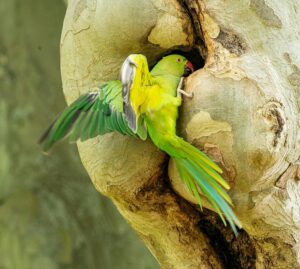
For wild parrots, foraging is the daily work of finding, accessing, and processing food. It isn’t a quick stop at a single source—it’s an active, ongoing pursuit that can take up many hours each day. Parrots travel through forests, savannas, and woodlands searching for seeds, nuts, fruits, blossoms, bark, and even insects. Food availability changes with seasons, weather, and location, so parrots must constantly observe, remember, and adapt.
How do Parrots Forage?
Parrots forage using a remarkable combination of intelligence, dexterity and physical strength. Their powerful beaks crack hard shells and strip bark, while their agile feet grasp, hold and manipulate food with precision. Many species forage in flocks, learning from one another which trees are fruiting or which foods are safe to eat. Others may forage more independently, but still rely on memory and problem-solving to return to productive feeding sites year after year.
Why is Foraging Important?
Foraging is essential not just for nutrition, but for mental and emotional health. The acts of searching, chewing, shredding and working for food keep a parrot’s brain engaged and his body active. This constant challenge helps prevent boredom, reduces stress and supports strong beaks and muscles. In the wild, foraging is woven into every aspect of a parrot’s day – it provides purpose as much as sustenance.
Foraging as a Way of Life
Ultimately, foraging is central to what it means to be a parrot. It shapes their intelligence, social behavior and resilience. When we observe wild parrots foraging, we see curiosity, persistence and joy in motion – birds fully engaged with their environment. Understanding this natural behavior helps us better appreciate parrots not just as beautiful birds, but as complex, thinking beings whose lives are rich with challenge and discovery.
Foraging and Companion Parrots
Much as we love our companion parrots, we’re not able to reproduce this environment for them. Spending their days in cages or play stands, foraging for them consists of going from the treat bowl to the food bowl – not much mental or physical stimulation there. In captivity, food is easy and predictable. Without challenges, parrots can become bored, frustrated or under-stimulated – which may contribute to unpopular behaviors – screaming, feather destructive behavior or even aggression. That’s why toys, especially foraging toys, are so critical for companion birds.
Foraging toys recreate the challenge and satisfaction or working for rewards. They encourage exploration, curiosity and problem-solving. A busy parrot is a happier parrot – and a healthier one, too.